
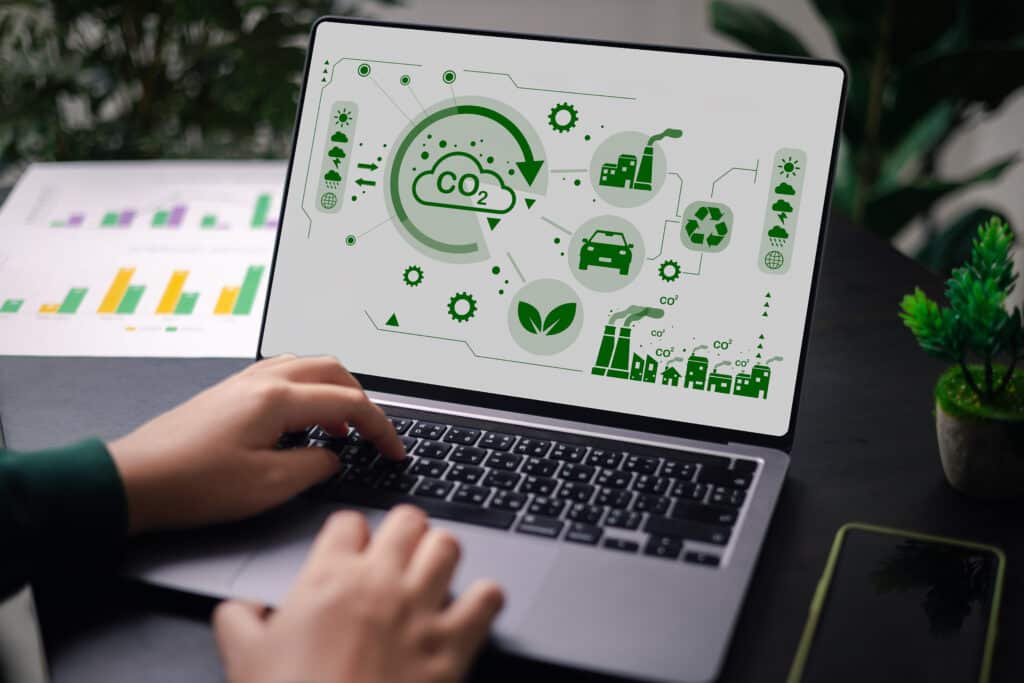
Investing in carbon reporting and working towards the UK’s broader mission to reach Net Zero. But there are also plenty of other good reasons why you should be considering energy efficiency initiatives and clean energy usage. Here’s why.
Every modern business has a responsibility to consider its impact on the planet. As the climate crisis continues, businesses need to be able to provide evidence of their sustainability credentials in order to comply with regulations, meet best practice and simply do the right thing.
Carbon emissions reporting is an essential way to measure both environmental impact and progress. While its primary goal is to benchmark and then track an organisation’s declining carbon footprint, there are also a host of lesser-known benefits attached to carbon emissions tracking and reporting.
Enhancing operational efficiency
Information is business currency and carbon emissions reporting is invaluable for the detailed insight it provides into energy usage and resource management. Businesses can implement targeted efficiency measures by identifying areas where energy consumption is high.
According to Carbon Trust, businesses can save up to 20% on their energy bills through improved energy efficiency practices. These savings can then be reinvested in other areas of the business, including further ESG (Environmental, Social and Governance) initiatives.
Gaining a competitive advantage
A study by Nielsen reveals that two thirds of global consumers are willing to pay more for sustainable goods and services, showing how today’s consumers and investors increasingly value sustainability.
This already impressive figure rises to 73% among millennials, so demonstrating a commitment to reducing carbon emissions can separate an organisation from its competitors, potentially opening up new markets.
Managing risk and compliance
The UK government has committed to a net-zero carbon economy by 2050, and as a result of this, legislations and regulations surrounding carbon emissions are becoming stricter. Voluntarily undertaking carbon emissions reporting allows businesses to stay ahead of regulatory changes, avoiding potential financial and legal consequences.
Even better, proactive carbon reporting can help identify risks associated with future regulations and mitigate them before they have a chance to impact operations.
Improving stakeholder relationships
Trust is crucial when it comes to stakeholder relationships – from customers and employees to investors and suppliers. And carbon emissions reporting can help foster transparency and trust.
According to a report by CDP, companies that disclose their environmental impact are more likely to maintain long-term relationships with stakeholders who value sustainability. It’s also essential for maintaining a positive brand image, and attracting top talent who prioritise environmentally responsible businesses.
Boosting innovation and growth
No business model is completely water-tight, and tracking carbon emissions can reveal inefficiency and areas for improvement that might otherwise fly under the radar. This can lead to innovation, as businesses seek new ways to tackle carbon emissions and achieve greener goals.
Steps like investing in renewable energy or adopting circular economy principles can help to not only reduce emissions, but also generate cost savings and fresh revenue streams.
Accessing financial incentives
Because Net Zero is a nationwide effort, the UK offers a range of incentives for businesses that demonstrate strong environmental performance. From lower interest rates on loans to grants and tax breaks, incentives like the Green Finance Strategy can provide a tangible return on investment for an organisation’s sustainability efforts.
Achieving long-term resilience
As the impacts of the climate crisis become more pronounced. Businesses that have already integrated sustainability into the foundations of their framework will be better equipped to handle disruptions and policy changes.
Key factors like fossil fuel price volatility matter less to businesses invested in renewable energy sources, while businesses with strong environmental practices are also likely to be more adaptable to future changes in market conditions and consumer preferences.
Make sustainability a priority for your business with carbon emissions reporting. Get in touch with the SmartCarbon team today.