CBAM reporting: everything you need to know
Get to know the Carbon Border Adjustment Mechanism and what it means for your business
What is CBAM?
CBAM stands for the Carbon Border Adjustment Mechanism – an EU regulation that entered into its two-year transitional period in October 2023.
The EU Carbon Border Adjustment Mechanism (CBAM) essentially puts a carbon price on imports of certain goods to prevent ‘carbon leakage’. CBAM ensures that European emission reductions contribute to global emissions reductions instead of pushing carbon-intensive production outside Europe.
CBAM will initially cover a number of commodities, including:
- Iron
- Steel
- Cement
- Fertilizer
- Aluminium
- Hydrogen
- Electricity generation
During the initial phase, from October 2023 to December 2025, importers of CBAM goods into the EU must report quarterly on the embedded carbon emissions in those goods. In this transitional phase no financial adjustment will be applied. From 2026 onwards, importers will need to purchase CBAM certificates corresponding to the embedded emissions in their products.
In December 2023 the UK Government announced that it will implement a CBAM similar to the EU CBAM with some notable differences in both scope and timescale.
CBAM compliance: how can SmartCarbon help?
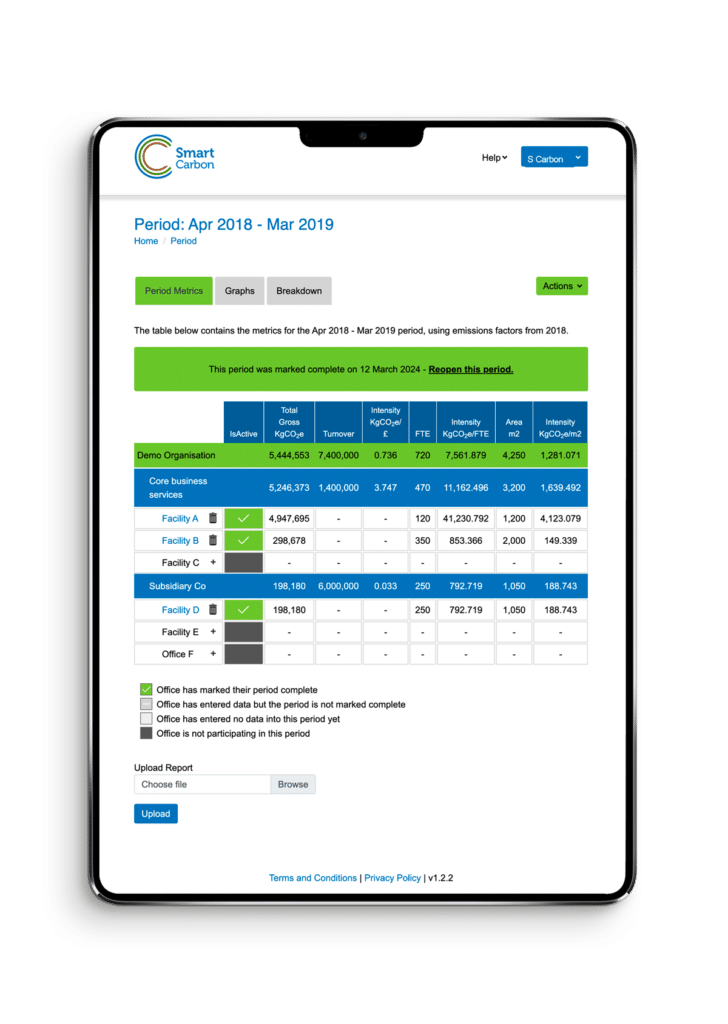
SmartCarbon can help organisations comply with CBAM by:
- Accurately measuring the embedded emissions in CBAM goods
- Support with the completion of quarterly CBAM reports to submit via the CBAM Transitional Registry
- Providing guidance, process and procedure on future data collection and emissions calculation requirements
- Providing guidance on alternative calculation options for future reporting.
We’re more than just a tech platform. Our team of sustainability specialists provide guided reporting support to get you up to speed quickly.
What happens if organisations fail to achieve CBAM compliance?
Financial penalties for CBAM non-compliance will come into effect from January 2025. Organisations importing the above commodities that have 500+ employes and €150m+ in net EU turnover are required to meet CBAM regulations or fines will be incurred.
Initial financial penalties will be set at €100 per tonne of carbon for non-compliance. In addition, organisations will suffer substantial reputational damage.