
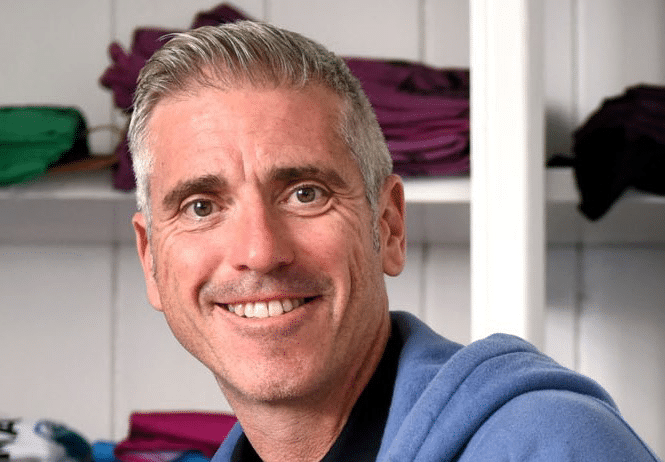
Peter Lillie is a business consultant, commercial strategist and innovation advocate. Over the last decade, his work has focused on developing commercial models that combine profitability and sustainability – a niche that has led to his current positions with both the Academic Health Science Network (AHSN) and Innovation SuperNetwork.
This month, Peter shared his experience of working alongside SmartCarbon and why benchmarking emissions is essential for any organisation looking to set a course for Net Zero.
Within his role at the AHSN, Peter now works with NHS Trusts to look at innovation strategies through a broad lens. And that includes addressing how sustainability initiatives can become an intrinsic part of working practice across departments. He says,
“The inclination from many organisations is to work on sustainability projects within a silo. But the truth is that this approach simply doesn’t drive progress. Sustainability needs to be woven into virtually every area of organisations like NHS Trusts.
“You wouldn’t expect a company to be able to increase profitability, cut costs or improve profitability without letting departments work together; so why would you expect to hit emissions or broader sustainability goals without internal collaboration?”
Peter explains that this process involves a strong emphasis on education and a shift in policies and procedures to make “a sustainable approach” the “de facto” approach within day-to-day work. A prime example of this would be in procurement, where organisations can introduce sustainability credentials as one of the basic criteria for any new supply contract.
SmartCarbon in action
Having first become aware of SmartCarbon through his role at the Innovation SuperNetwork, Peter immediately saw the benefits of the company’s tool in solving the problem of “baselining” emissions. As Peter explains, this enables organisations to identify a starting point for their sustainability pathway.
“It’s critical that organisations take steps to become more sustainable and lower the impact on the planet. But what’s most important in that process is that any changes are authentic and measurable – rather than cynical marketing tactics or ‘greenwashing’.
“That’s where a company like SmartCarbon comes in. By enabling businesses or institutions to benchmark emissions, the SmartCarbon Calculator provides a genuine starting point from which you can start to put solutions in place.”
Peter quickly saw how the SmartCarbon Calculator could be of relevance in his work at the AHSN – a body that connects NHS and academic organisations, local authorities, the third sector and industry to facilitate change across the health and social care economies.
He says,
“First and foremost, I saw that SmartCarbon had a role to play in our own journey. As an organisation, we needed to be authentic about our own carbon footprint and align ourselves with the NHS Green Plan in the North East and Cumbria.
“That process of engaging with the SmartCarbon team to measure our own baseline was an important and enlightening one. From there, we also worked with them to devise a carbon reduction plan.
“Subsequently, I’ve been impressed by the work that SmartCarbon have done with Durham University and Newcastle Hospitals in establishing their baselines.”
Both the AHSN and Innovation SuperNetwork have played an important role in promoting the effective benchmarking of supply chain emissions within the Newcastle Hospitals Trust – estimated to account for at least 65% of the Trust’s emissions.
Importantly, Newcastle Hospitals’ initiative wasn’t intended to present barriers to suppliers. Rather the intention of the initial pilot scheme was to support businesses to become more informed about their carbon footprint, report on performance, publish targets and, ultimately, take steps towards reducing their carbon footprints.
[You can read the full case study here.]Having witnessed the role that SmartCarbon played in supporting Newcastle Hospitals’ supply chain, Peter says,
“From my experience, I would say that the SmartCarbon Calculator is one of the best tools I have seen for giving organisations a starting point. And it can help them to map progress as they implement their carbon reduction plans over time.”
Ready to take the climate emergency seriously as a business but not sure where to start? Or are you simply looking to improve your current reporting? Get in touch with the SmartCarbon team today and let us help you make a start on the calculating and reporting of your greenhouse gas emissions.