
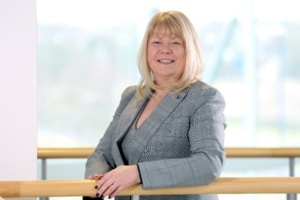
This month, SmartCarbon sat down with CEO of Constructing Excellence in the North East (CENE), Catriona Lingwood, to get a first-hand account of how the SmartCarbon Calculator and our consultancy support is helping clients and partners to work towards their emissions goals.
Constructing Excellence in the North East is an organisation “charged with driving the change agenda in construction, housing and regeneration”. As CENE CEO, Catriona Lingwood explains, those priorities have evolved and changed significantly over the last 20 years:
“Back in the early 2000s our focus was often on issues such as health and safety – an area in which I’m glad to say we’ve made a lot of progress. More recently we’ve been focused much more on issues such as workplace wellbeing and, of course, matters relating to sustainability and green initiatives.”
Tasked with helping the UK construction industry to offer genuine value to its clients, end users and stakeholders through the delivery of world-class products and services, there are few priorities more significant to CENE than the climate crisis.
As Catriona explains,
“Climate change is the top concern for the future of our planet, and so it is the top priority for us. We know that the construction industry accounts for a substantial 10% of the UK carbon emissions and has a role to play in 47% of all national emissions.
“It’s clear that if we are to make a difference for our children and our children’s children, the construction industry – and all other industries, for that matter – need to be acting now. It’s for this reason that the North East England Construction Industry has pledged to support the North East England Climate Coalition’s ambition of becoming ‘England’s Greenest Region’.”
In order to do that, Catriona explains that the sector must first understand its consumption by calculating and reporting on carbon emissions before it can begin to work towards those goals. And it is this requirement that has led to CENE working with SmartCarbon as part of the Decarbonising NEE Construction scheme.
This five-step programme is designed to educate organisations and individuals within the industry, give them the tools to report their carbon footprints and put plans in place to reduce emissions – with the ultimate goal to develop a framework for a Net Zero future.
Catriona says:
“The availability of the SmartCarbon Calculator tool has proved itself to be invaluable as part of this new programme – as has the IEMA endorsed training delivered by the consultants at SmartCarbon. The feedback we’ve had from those organisations who have shown a commitment to reporting on emissions has been incredibly positive across the board.
“It’s apparent that people simply don’t know how to start or where to start on their journey to Net Zero. This programme really helps organisations to take their first steps in the right direction.”
You can find out more about the Decarbonising NEE Construction programme here.
One example of an organisation that has worked with CENE and SmartCarbon to report on emissions is North East architecture firm, JDDK Architects. Having used the SmartCarbon Calculator since 2019 to calculate the business’s carbon footprint, Sam Dixon of JDDK says,
“It is an invaluable tool to us that is easy to use and ensures our calculations are accurate and up to date with the latest UK Government Conversion factors.”
Where next for the construction sector?
Asked how she sees progress being made in achieving their goals of emissions reductions over the coming years, Catriona says,
“I think we’ve seen organisations becoming a lot more motivated to take the climate emergency seriously in recent times. Certainly, I’ve noticed a shift in perceptions since COP26 in Glasgow last year. That event was a huge eye opener for many people.
“In the immediate future, I think that organisations reporting on their emissions, taking steps to improve efficiency and looking to utilise renewables will grow. But I think we also need to encourage innovation to help us drive change quicker.”
Catriona explains that innovation has always been an important feature of the construction sector – in terms of new building methods, new materials and new technologies to help progress the built environment. But, more recently, she’s been delighted to see more attention being paid to innovation with a green focus.
“There are already a number of initiatives that we are actively involved in, such as projects designed to reduce the carbon emissions in the manufacturing of concrete and the utilisation of recycled materials in this process. Similarly, there’s another project in the North East region that’s using recycled materials in road building, which is also serving to reduce carbon emissions.”
In addition, Catriona says that there are a whole range of other improvements and pilot programmes within the industry to reduce carbon footprints. From upgrading to low-energy lighting in buildings to switching to EV fleets to an exciting hydrogen energy project currently underway in Durham – there’s no shortage of exciting projects happening all over the region. She says,
“If better solutions can be developed quickly, we’ll be better placed to meet those Net Zero targets and improve the prospects for generations to come.
“Not only that but we need to ensure that SMEs are not left behind. In fact, we have another course in the planning stages at the moment that we hope to roll out before the end of the year with SmartCarbon’s help. That will be focused on assisting small businesses in the region to better understand their emissions – just as we have been doing with larger and public-sector organisations.”
“But it all starts with gaining a better understanding of how the industry is generating emissions now and benchmarking those emissions, in order for plans to be put in place and proactive steps to be taken.
“Thanks to the SmartCarbon Calculator we are now well on our way towards having some genuinely meaningful data around the North East’s built environment. That data will help to inform future plans and keep the industry accountable as it looks to implement change.”
Ready to take the climate emergency seriously as a business but not sure where to start? Or are you simply looking to improve your current reporting? Get in touch with the SmartCarbon team today and let us help you make a start on the calculating and reporting of your greenhouse gas emissions.