
Reflecting back on 2021, and undoubtedly one of the most significant events in our calendar was COP26, which took place in Glasgow from 31 October – 12 November. SmartCarbon Ltd’s Director Anna-Lisa Mills had the opportunity to attend the conference, so we took the time to ask her some questions and learn more about her experience.
We all saw coverage about COP26 on the news, it was attended by world leaders and even celebrities – can you tell us a little about what the experience was like from the perspective of an attendee?
I found the experience both fascinating and depressing! I was very lucky to get the opportunity to attend and immerse myself in the experience. I attended as an NGO Observer on behalf of IEMA (The Institute of Environmental Management and Assessment)’s Climate Change and Energy Steering Group.
Attending it was just like a typical business conference – with a few key differences, there was heavy security, which was to be expected, but I was surprised by the sheer size of it and how many delegates attended – it was heaving, and I hit my 10,000 steps every day just by walking from presentation to presentation! But it does make you wonder what it all accomplished.
When I say it was fascinating, that was because I was spoiled for choice with interesting presentations I could attend at the main pavilion and it was great to catch up with friends and colleagues. I enjoyed some of the award ceremonies and visiting showcase innovations, which reassured me that we really aren’t short of solutions.
But on the other hand, it was ultimately a very depressing affair for me. Whilst there were lots of seemingly encouraging announcements around deforestation, ocean protection reduction of coal use and methane emissions and new pledges for climate finance and net zero targets, the sum outcome is that it fell way short of what the climate crisis demands.
The most important goal is to cap warming at 1.5 degrees above our pre-industrial base line but the national declared contributions (pledges submitted by each nation) do not collectively add up to anywhere near this limit.
What would you say was the highlight of the event?
The absolute highlight for me was getting to have a long conversation with Professor Kevin Anderson. Kevin is a climate scientist and is Professor of Energy and Climate Change, at both the University of Manchester and in Centre for Sustainability and the Environment (CEMUS) at Uppsala University (Sweden). He has previously been both Deputy Director and Director of the Tyndall Centre for Climate Change Research.
Kevin has been a climate hero of mine for many years and I have always seen him as the voice of reason on both the climate crisis and the political response. When we chatted over coffee, he told me he felt we had around 5% chance of holding warming to 1.5 degrees, this certainly focused my mind on the importance of the conference.
What was your experience of the talks and presentations?
There was so much choice for presentations to attend that I was able to select the talks that mattered most to me. I invested in my own CPD and increased my knowledge in topics like decarbonising construction and sustainable design. I attended presentations at the Healthcare Pavilion, the Science Pavilion and the Business for 1.5 degrees stand. This was all very informative and will help me to improve the quality of my consultancy and training delivery.
The problem was that the conference invited like-minded people saying the same things, which created an “echo-chamber effect”, where it seemed like progress was happening, when in fact it isn’t enough to change our current trajectory.
Now that COP26 is over – where do we go from here?
We went to COP26 with global pledges that added up to 2.7 degrees of warming, we came out of COP26 with pledges that add up to 2.4 degrees. That might sound like progress, however, if the past 25 COPs are anything to go by, pledges don’t translate to action.
The science shows the emissions are still rising, exponentially. We are already 1.2 degrees warmer than our pre-industrial baseline and scientists warn us that we should not exceed 1.5 degrees of warming if we want the best chance of avoiding passing tipping points and runaway warming.
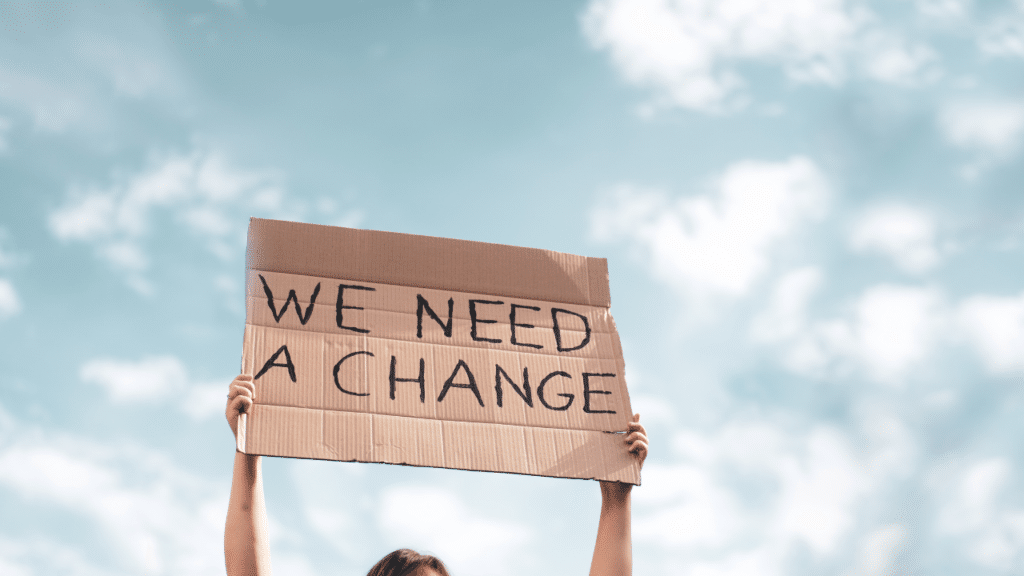
One of my key takeaways from the conference was that we can’t rely on world leaders and politicians to respond accordingly to the climate emergency. We need action that matches the scale of the risk and, from the climate marches both inside and outside of the conference, it is clear that society is aware of this fact. But civil society cannot fix the problems that are at the heart of the crisis. Therefore, I believe there is an opportunity for it is up to the business community to adopt a leadership position and demonstrate that transformative change is possible!
How can SmartCarbon Ltd help organisations if they want to take meaningful action?
No matter where your business is in this journey, SmartCarbon Ltd can help you get to your goal further and faster. We are increasingly being asked to run leadership workshops for Board members and awareness sessions for employee engagement. We also have a full day IEMA approved Climate and Carbon course available through Northumbria University.
We offer consultancy support packages and we have an online SmartCarbon carbon footprint calculator platform, which will help you produce a robust carbon footprint baseline to measure your own organisational progress towards Net Zero. We also have an award-winning model to measure, engage and collaborate with your suppliers if you wish to also reduce your Scope 3 emissions.
If you’d like to learn more about how we can help you on your Net Zero journey, you can contact us on 07971 070434 or email [email protected].
Contact Anna-Lisa via LinkedIn